

Glass vs Tile Splashbacks: Which Is the Better Investment for Your Home? It is a common question for UK homeowners planning a kitchen renovation.
The right splashback affects how your kitchen looks, how easy it is to clean, and how well it stands up to daily use. For many British homes, the choice often comes down to two popular options: glass splashbacks and tile splashbacks.Both can work well, but they suit different budgets, styles, and long-term plans.
If you are updating a kitchen in England, this guide will help you make a confident, practical choice.
Understanding Glass vs Tile Splashbacks in Modern UK Kitchens
Splashbacks protect the wall behind your hob, sink, and worktops. They also play a big part in the overall look of your kitchen.
In modern UK kitchens, homeowners often want surfaces that are stylish, low-maintenance, and durable. That is why glass splashbacks and tile splashbacks are two of the most common kitchen design choices.
Tiles have been used in British homes for many years. They can suit both traditional kitchens in England and more rustic spaces. Glass, however, has become a strong choice in modern kitchen design because it offers a sleek, smooth, and easy-clean finish.
Choosing between the two is not only about appearance. You should also think about cleaning, fitting, long-term value, hygiene, and how the splashback will perform over time.
What Are Glass Splashbacks?
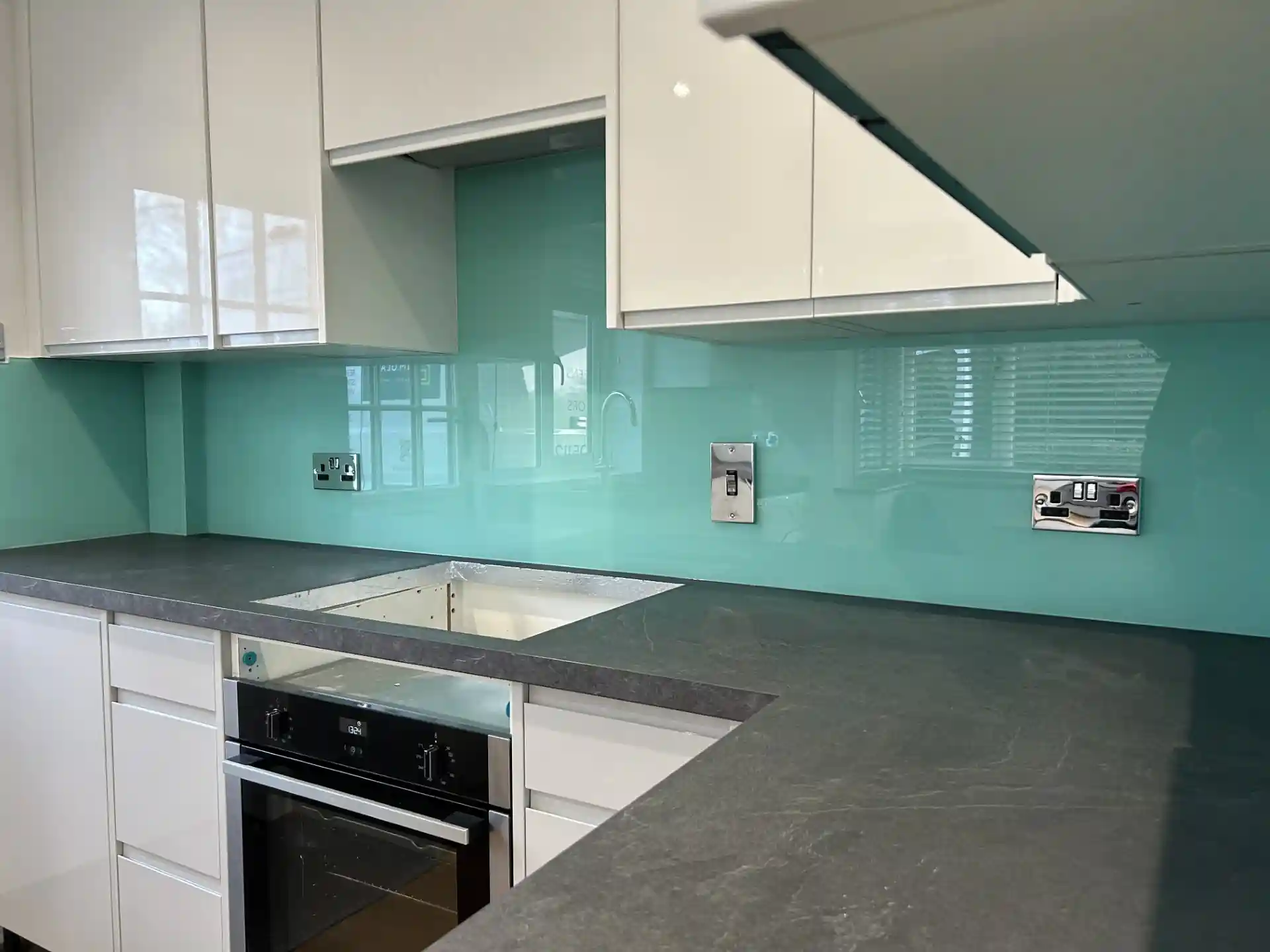
Glass splashbacks are smooth panels of glass fitted to the wall behind kitchen work areas. They are often made from toughened safety glass, which is heat-resistant and suitable for use behind hobs when installed correctly.
A toughened glass splashback can be made to measure, so it fits neatly around sockets, cupboards, cooker hoods, and worktops. This creates a clean, seamless finish with very few joints.
Many homeowners choose kitchen glass splashbacks because they are easy to wipe clean and can be designed in a wide range of colors, finishes, and styles. They can be clear, colored, mirrored, printed, or matched to your kitchen scheme.
Glass is also popular for bespoke splashbacks, especially in homes where the kitchen layout is not standard.
What Are Tile Splashbacks?
Tile splashbacks are made from individual ceramic, porcelain, stone, or glass tiles fixed to the wall with adhesive and finished with grout.
Tiles are available in many shapes, sizes, colors, and patterns. This makes them a flexible option for both classic and modern homes.
However, tile splashbacks have grout lines between each tile. These lines can collect grease, dirt, and moisture over time. They may need more cleaning and upkeep than a single glass panel.
Tiles can be a good option if you want a patterned or traditional look. They may also suit smaller budgets at the start, depending on the tile chosen and the size of the area.
Glass vs Tile Splashbacks: Which Is the Better Investment for Your Home?
Glass vs Tile Splashbacks: Which Is the Better Investment for Your Home? The short answer is that glass is often the better long-term investment for homeowners who want a modern look, easier cleaning, and a made-to-measure finish.
Here is a simple comparison:
| Feature | Glass Splashbacks | Tile Splashbacks |
|---|---|---|
| Cleaning | Very easy to wipe clean | Grout needs regular cleaning |
| Appearance | Smooth, seamless, modern | Traditional, patterned, varied |
| Customisation | Excellent for made-to-measure designs | Good, but limited by tile format |
| Hygiene | No grout lines | Grout can hold dirt and moisture |
| Durability | Strong when made from toughened glass | Durable, but tiles can chip or crack |
| Long-term value | Often higher for modern renovations | Depends on style and condition |
For kitchen renovation UK projects, glass is now a leading choice for homeowners who want durable kitchen surfaces with a refined finish.
Cost Comparison: Glass vs Tile Splashbacks
Cost matters in every renovation. But the cheapest option at the start is not always the best value over time.
When comparing glass and tile splashbacks, look at both installation and long-term maintenance.
Initial Installation Costs
Tile splashbacks can have a lower starting cost if you choose simple ceramic tiles. However, the final price depends on tile quality, wall preparation, labour, grout, trims, and the complexity of the layout.
Premium tiles, handmade tiles, stone tiles, or complex patterns can quickly increase the cost. Herringbone, metro tile patterns, and mosaic designs often take longer to install, which can raise labour costs.
Glass splashbacks may cost more upfront, especially when they are made to measure. However, they are usually supplied as custom glass panels that are cut to fit your exact kitchen space. This can create a cleaner and more professional result.
A made-to-measure glass panel can also reduce the need for multiple materials, grout, trims, and ongoing repair work.
If you want a polished finish, professional splashback installation is important. Accurate measuring, safe fitting, and proper glass specification all affect the final result.
Long-Term Maintenance Costs
Tile splashbacks may need more upkeep over time. Grout can stain, crack, or become discolored, especially behind hobs and sinks. In busy family kitchens, this can mean extra cleaning products, grout pens, or re-grouting later.
Glass splashbacks are easier to maintain because they have a smooth surface with no grout lines. In most cases, a soft cloth and suitable glass cleaner are enough to remove grease, marks, and splashes.
Over several years, this lower maintenance can make glass a better investment. It saves time and helps the kitchen keep its fresh appearance for longer.
For homeowners following home renovation UK trends, low-maintenance finishes are a major priority. People want kitchens that look good without needing constant care.
Durability and Maintenance Differences
A kitchen splashback must handle heat, steam, grease, splashes, and daily cleaning. It is not just a decorative feature.
Both glass and tiles can be durable, but they perform differently.
Cleaning and Hygiene
Glass is one of the easiest kitchen wall panels to clean. Because it is smooth and non-porous, grease and food splashes sit on the surface rather than soaking in.
There are no grout lines, so there are fewer places for dirt to build up. This makes glass a practical choice for busy households, rental properties, and family kitchens.
Tiles can also be cleaned, but grout is the weak point. Even sealed grout can become marked over time. In areas near a hob, grease can settle into the grout lines and become harder to remove.
For hygiene, glass usually has the advantage. This is one reason many homeowners choose glass splashbacks in modern UK kitchens.
Resistance to Heat and Moisture
A toughened glass splashback is designed to withstand heat when specified and installed correctly. It is a suitable option behind many hobs and cooking areas.
Glass also handles moisture well, which makes it useful near sinks and worktops. Since there are no tile joints, there is less risk of water getting behind the surface.
Tiles are also heat-resistant, depending on the material. Ceramic and porcelain tiles are commonly used in kitchens and can perform well. However, grout and adhesive can be affected by moisture if not installed or maintained correctly.
If a tile cracks or grout fails, water may find its way behind the splashback. Over time, this can lead to staining, loose tiles, or repair work.
When you want durable kitchen surfaces that stay looking sharp, glass offers a strong balance of heat resistance, moisture resistance, and easy upkeep.
Design Flexibility in Modern UK Kitchens
Your splashback can either blend into the background or become a standout feature. This is where design flexibility becomes important.
Glass and tiles both offer style options, but they create very different effects.
Colour Options and Customisation
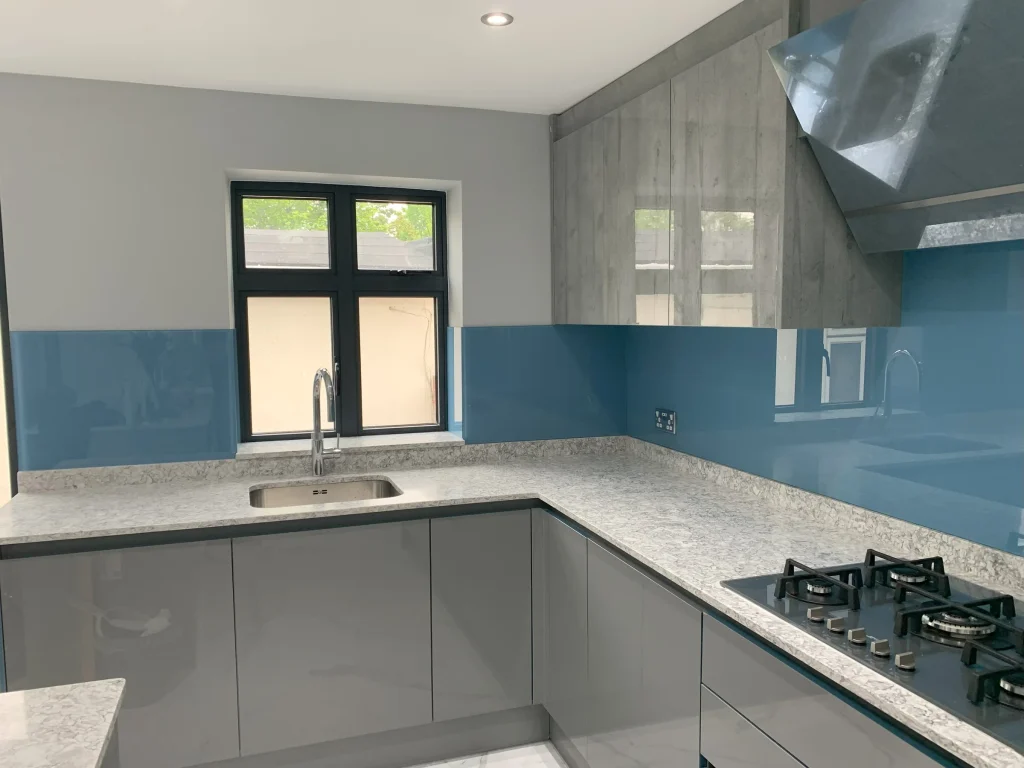
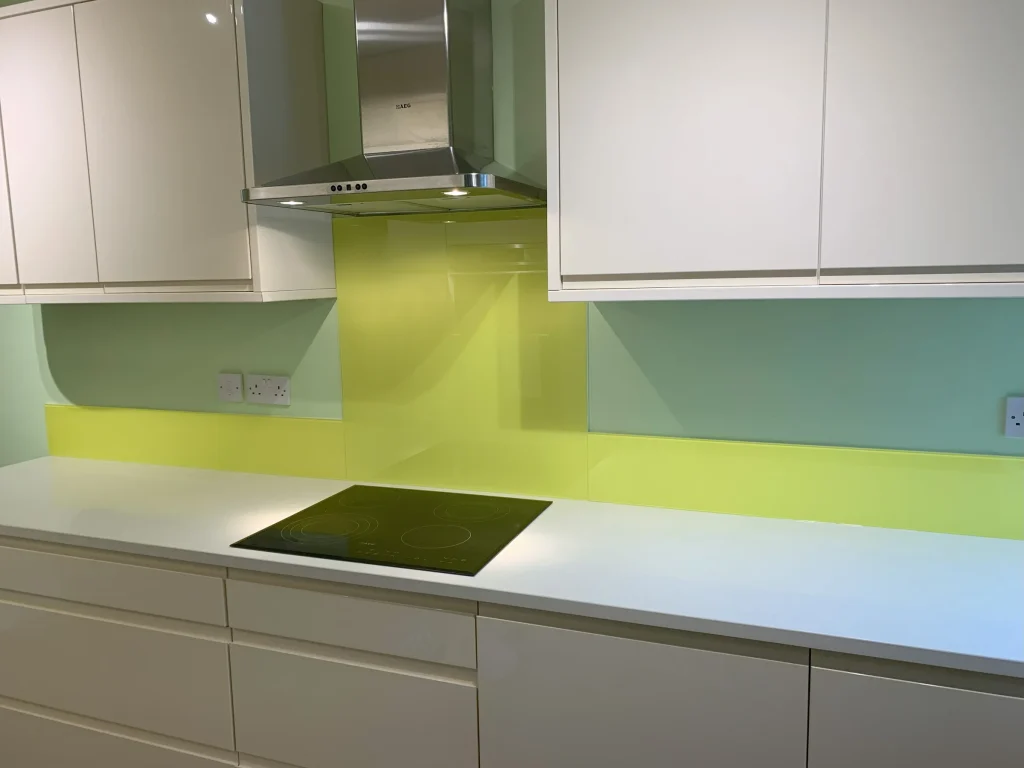
Glass splashbacks can be produced in a wide choice of colors and finishes. You can choose bold shades, soft neutrals, metallic tones, mirrored effects, or printed designs.
This makes glass ideal for bespoke splashbacks. It can be matched to cabinets, worktops, flooring, or feature walls. It can also be used to add contrast in a plain kitchen.
For example, a deep blue glass splashback can add richness to a white kitchen. A soft grey panel can create a calm, high-end feel. A mirrored finish can help reflect light in smaller kitchens.
Homeowners can explore bespoke glass splashbacks when they want something that fits their exact space and style.
Tiles also offer many design choices. You can choose plain tiles, patterned tiles, textured tiles, or natural stone. However, the final look is shaped by tile size, grout color, and layout.
Tiles work well if you want a handmade, farmhouse, or period-style finish. Glass works better if you want a clean, modern, and seamless look.
Seamless Modern Look vs Traditional Style
Glass is strongly linked with modern kitchen design. Its seamless finish works well with handleless cabinets, quartz worktops, open-plan layouts, and clean architectural lines.
Because glass panels are made to fit, they can cover large areas without visual breaks. This helps the kitchen feel more spacious and less cluttered.
Tiles create a more detailed look. That can be attractive in traditional kitchens in England, especially where character and texture matter. Metro tiles, for example, remain popular in many British homes.
The choice depends on your property and personal taste. A Victorian terrace may suit tiles if you want to keep a heritage feel. A new-build or renovated family home may benefit more from the sleek look of glass.
UK homeowners kitchen trends show a clear move toward easy-clean, custom, and premium-looking finishes. This supports the growing demand for glass splashbacks.
Which Option Adds More Property Value in the UK?
A splashback alone will not transform a property’s value. But it can influence how buyers feel about the kitchen.
Kitchens are one of the most important rooms when selling a home. Buyers notice whether the space feels clean, modern, and well cared for.
Buyer Preferences in England
In England, many buyers prefer kitchens that look fresh and require little work after moving in. A clean glass splashback can help create that impression.
A well-fitted glass panel suggests that the kitchen has been planned carefully. It can make the room feel more modern, especially when paired with good lighting and quality worktops.
Tile splashbacks can also appeal to buyers, especially in character homes. But outdated tiles, dirty grout, or cracked sections can make a kitchen look tired.
A dated splashback may not stop a sale, but it can affect the buyer’s view of the property. They may see it as another job to add to their list.
Long-Term Kitchen Investment Benefits
For long-term investment, glass often offers better value because it stays cleaner, looks newer for longer, and can be designed around your exact kitchen.
It also supports a high-end finish without needing a full kitchen replacement. If your units and worktops are in good condition, upgrading to glass can refresh the whole space.
This is useful for homeowners who want to improve their kitchen before selling, renting, or simply enjoying the home more.
Tiles can still be a good investment if they suit the property style and are installed well. But if you want a modern finish with less maintenance, glass is often the stronger choice.
Why Homeowners Choose IM Glass for Splashbacks
Choosing the right material is only part of the decision. The quality of measuring, manufacturing, and fitting also matters.
IM Glass works with homeowners who want stylish, practical glass solutions for kitchens and other areas of the home. For splashbacks, attention to detail is essential.
Made-to-Measure Solutions
Every kitchen is different. Walls may not be perfectly straight. Sockets, hobs, cupboards, extractor fans, and worktop heights all need careful measuring.
Made-to-measure glass helps create a clean and accurate fit. It reduces awkward joins and helps the finished kitchen look more professional.
Homeowners looking for custom glass panels can benefit from a tailored approach. This is especially useful in renovated homes, extensions, and older properties where standard sizes may not work.
Premium Glass Finishes
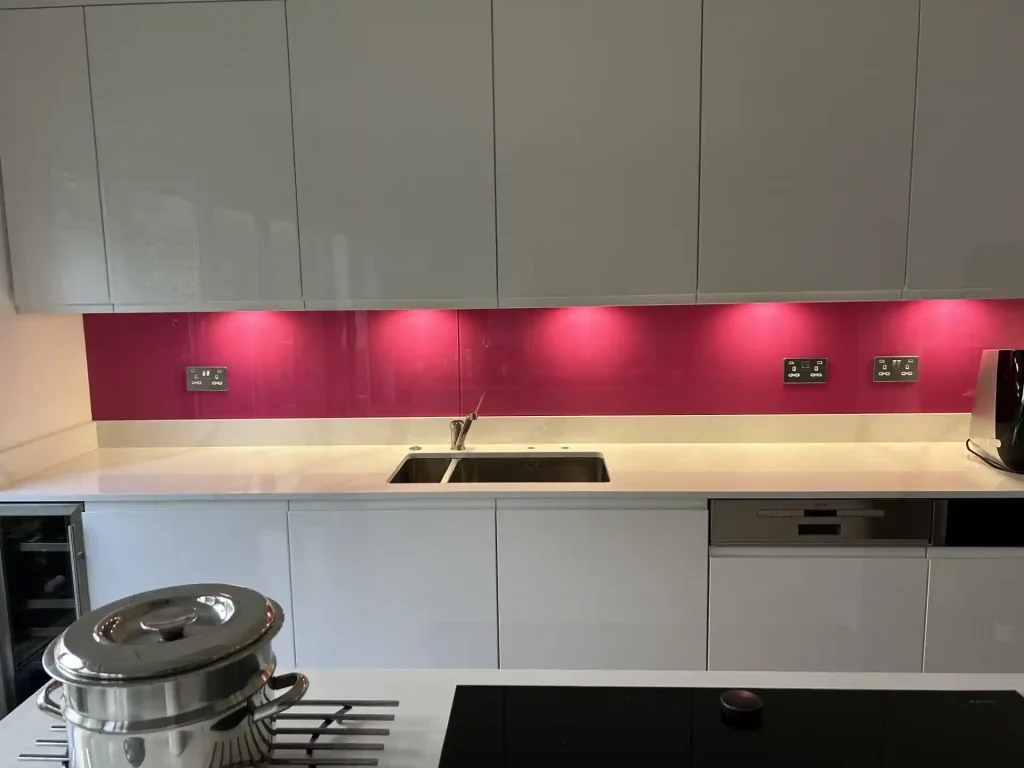
Glass splashbacks can be simple or bold. You may want a neutral panel that blends in, or you may want a feature color that lifts the whole room.
Premium finishes can include back-painted glass, mirrored effects, and other stylish options. These choices help homeowners match the splashback to their wider kitchen design choices.
If you are comparing coloured splashbacks, think about light, cabinet color, flooring, and worktop material. A good finish should work with the whole room, not fight against it.
Professional Installation Across the UK
Professional installation helps ensure the glass is safe, secure, and correctly positioned. This is especially important around heat sources, sockets, and uneven walls.
A quality installer will understand the need for accurate measuring, suitable glass, clean edges, and neat sealing.
For homeowners across England, professional kitchen splashback solutions can make the difference between a basic update and a refined finish that lasts.
Good installation also protects your investment. A splashback should not only look good on day one. It should continue to perform well through years of cooking, cleaning, and everyday use.
Frequently Asked Questions
1. Glass vs Tile Splashbacks: Which Is the Better Investment for Your Home?
Glass vs Tile Splashbacks: Which Is the Better Investment for Your Home? For many UK homeowners, glass is the better long-term investment because it is easier to clean, more hygienic, and gives a sleek modern finish.
Tiles can be cheaper at the start and may suit traditional homes, but grout lines need more care. If the grout stains or cracks, the kitchen can start to look older sooner.
Glass works especially well for homeowners who want a low-maintenance, made-to-measure finish that supports modern kitchen design.
2. Are glass splashbacks safe behind a hob?
Yes, glass splashbacks can be safe behind a hob when they are made from toughened glass and installed correctly.
Toughened glass is designed to handle higher temperatures than standard glass. It is commonly used for kitchen splashbacks, especially behind cooking areas.
The key is to use the right glass specification and a professional fitter. Correct measuring and installation help reduce risks and improve long-term performance.
3. Are tile splashbacks cheaper than glass splashbacks?
Basic tile splashbacks can be cheaper upfront than glass. However, the final cost depends on the tile type, layout, labour, and wall preparation.
Simple ceramic tiles may be budget-friendly. But premium tiles, detailed patterns, and complex fitting can increase the price.
Glass may cost more at first, but it can offer better long-term value because it is easier to clean and does not need grout maintenance.
4. Which splashback is easier to clean?
Glass is usually easier to clean than tiles. A glass splashback has a smooth surface with no grout lines, so grease and splashes can be wiped away quickly.
Tile surfaces are easy to clean, but grout can collect dirt, oil, and moisture. This means tiles often need more regular scrubbing, especially behind hobs.
For busy kitchens, glass is often the more practical choice.
5. Can glass splashbacks be made to fit unusual kitchen spaces?
Yes, glass splashbacks can be made to measure for unusual kitchen spaces. This is one of their biggest advantages.
They can be cut around sockets, corners, cooker hoods, shelves, and other features. This makes them suitable for both new kitchens and older British homes with less standard layouts.
Bespoke splashbacks are a strong option if you want a precise, polished finish that feels designed for your home.
Final Thoughts
Choosing between glass and tiles comes down to style, budget, maintenance, and long-term value.
Tile splashbacks can work well in traditional kitchens in England, especially when you want pattern, texture, or a classic feel. But they do need more care, mainly because of grout.
Glass splashbacks offer a smooth, modern, and easy-clean finish. They are ideal for homeowners who want durable kitchen surfaces, a made-to-measure look, and less maintenance over time.
Glass vs Tile Splashbacks: Which Is the Better Investment for Your Home? In many modern UK kitchens, glass is the stronger long-term choice because it combines style, hygiene, durability, and custom design.
If you are planning a kitchen renovation and want expert help with glass splashbacks, visit the IM Glass splashbacks service page for quotes, advice, and consultation: bespoke splashback installation.